- No products in the cart.


24
Jun
Diamond Trends: Champagne, Brown, Pink and Yellow Colours
Diamond Trends: Champagne, Brown, Pink & Yellow Colours
And what it means for engagement rings
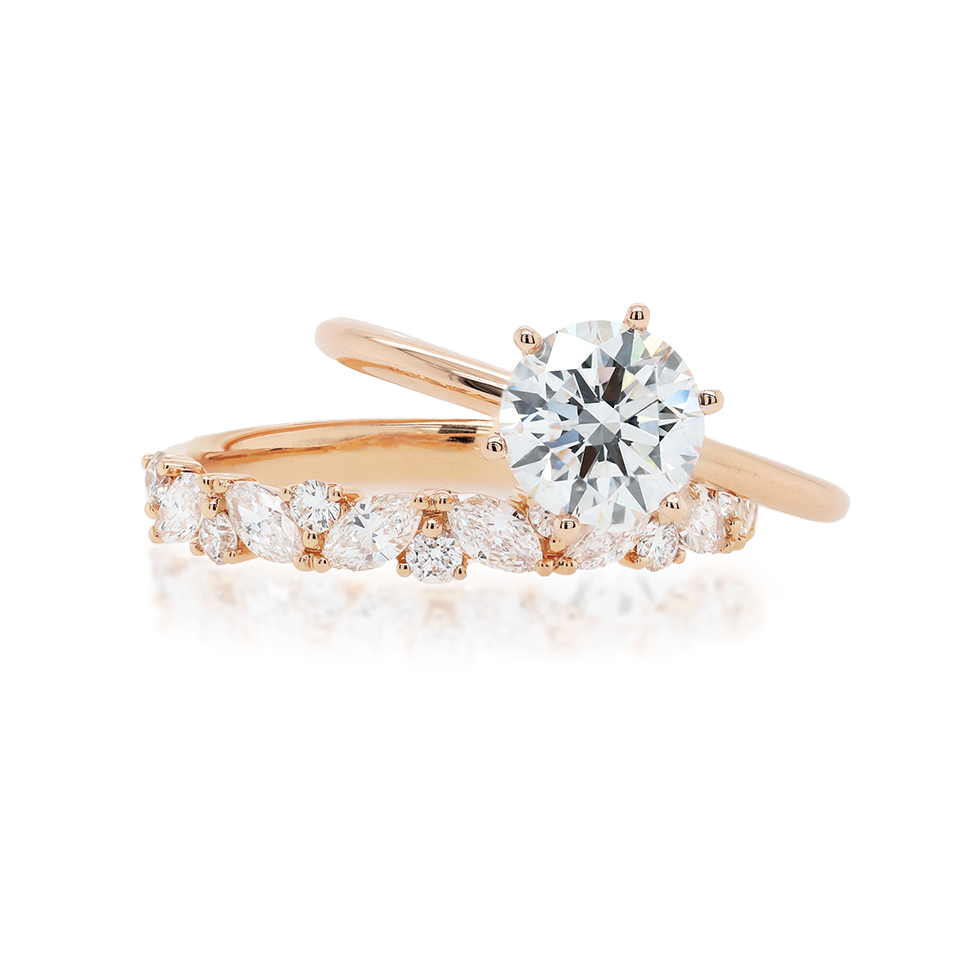
For decades, the diamond world was ruled by a single ideal: colourless, bright white, and graded as close to D as your budget would allow. That era is over. In 2026, the stones generating the most excitement for engagement rings are warm, complex, and unmistakably tinted. Champagne. Blush pink. Cognac brown. Sunlit yellow. These romantic coloured diamonds are a truly unique choice for engagement rings.
Here's what's driving the trend, what each colour means, and how lower colour grade white diamonds can offer a similar warmth and tone.
Coloured Diamonds in 2026
Coloured diamonds are gaining renewed momentum this year, driven by limited supply and rising demand from markets in Europe and the Middle East. Consumers desire for individuality and depth has continued growth in 2026, where jewellers and industry insiders describe a decisive pivot: buyers are seeking subtly coloured diamonds. From light champagne, pale pinks, soft browns and pale yellows. Those that feel romantic and full of character.
The result is a palette that feels earthy, feminine, and quietly luxurious all at once. Champagne, warm white, and warm honey diamond tones, often called "desert diamonds," are being positioned as the defining colour story of 2026.
Champagne Diamonds: The Star of the Season
If there is one stone that defines the current moment, it is the champagne diamond. These warm-toned diamonds from soft white wine through to rich golden-brown.
The shift didn't happen overnight. The term "champagne" is trade vocabulary rather than a formal GIA grade. On a certificate, lighter champagne stones appear as L, M, N or O on the standard colourless scale, while deeper examples are graded as Fancy Light Brown, Fancy Yellow-Brown, or Fancy Brownish-Yellow on the fancy colour scale.
Typically anything below L-M on the white diamond scale was considered less desirable, that perception has shifted entirely. Their romance and design flexibility is a large part of their appeal. Set in yellow gold they glow warmly, in rose gold they complement the pinkish tones, and in white gold they take on a cooler contrast.
Champagne diamonds are appearing in everything from dainty everyday pendants to showstopping cocktail rings. Most buyers this year are gravitating toward the lighter and middle range. The "off-white warm" tones that read as cream or dry champagne, as well as those closer to the deep cognac hues. It is a choice that feels both modern and effortlessly glamorous.
Brown Diamonds: Endless Appeal
The appeal is intuitive once you see it. Brown diamonds have an almost nude hue, warm and skin-close, with a softness that white diamonds can't replicate. They are earthy without being heavy, and they work beautifully in tonal palettes that mix white diamonds in the same ring.
The soft subtle colours of brown diamonds complement the hand perfectly. These stones feel like an extension of the wearer rather than an adornment placed upon them.
Yellow Diamonds: The Limited Colour
Natural Yellow Diamonds in 2026, their investment relevance has intensified, as supply constraints and growing collector interest push prices upward.
Unlike the subtle warmth of a champagne stone, fancy yellow diamonds make a statement. Their colour comes from nitrogen impurities trapped in the crystal structure, and the most prized examples show intense, vivid saturation with no brown or green. Yellow diamonds appear across the full range of fine jewellery. From small, brilliant-cut accent stones in patterned eternity bands to large engagement ring solitaires.
Pink Diamonds: The Rarity Premium
Pink diamonds have always commanded reverence. The pink diamond engagement ring reads, in celebrity culture, as the ultimate romantic gesture. What makes 2026 particularly significant for pink diamonds is the supply story. The Argyle mine in Western Australia's East Kimberley region (which accounted for the leading global supply of natural pink diamonds) closed in 2020. The consequences are now fully being felt in the market. With no replacement source of meaningful scale, natural pink diamonds are becoming genuinely scarcer year by year, and their prices are climbing accordingly.
Pink diamond’s values have risen considerably since the Argyle closure. A real-world illustration of how post-mine scarcity translates into price appreciation. For buyers who can access them, natural pink diamonds in 2026 represent not just a beautiful stone but a compelling store of value.
Lower-Grade White Diamonds: Romance & Warmth
Champagne, brown, yellow, and pink are officially graded as fancy colour diamonds when their hue is strong enough. But white diamonds can also offer a similar visual warmth on the lower end of the GIA colour grade scale, between L–Z.
GIA grades white diamonds on a D-to-Z scale, where D is perfectly colourless and Z shows a clearly visible yellow or brown hue. All diamonds on this scale are technically "white," but from around L downward, the warmth becomes perceptible to the naked eye.
L–M (Faint colour): Diamonds in this range carry a faint yellow or brown tinge. When viewed as a loose stone, the colour is visible to the eye. Depending on the desired appearance, the diamond colour can be amplified with their ring setting. When set inside in a yellow gold ring, to bring out their warm yellow hues or in rose gold setting to highlight any pink tones within.
N–Z (Very light to light colour): At the lower end of the scale, the warm tinge becomes more pronounced. A well-cut N or O colour diamond in a yellow gold setting can read almost identically to a lighter champagne fancy colour stone.
The key insight: the distinction between a K colour white diamond and a "Fancy Light Brown" champagne diamond can be largely a matter of how the stone's warmth is framed and certified. A lighter champagne diamond is graded on the same scale as white diamonds. Any stone graded L through Z carries those faint yellow or brown tones that define the champagne look.
Styling tips to maximise lower-grade white diamonds:
-
Yellow gold settings are transformative. The warm metal absorbs and enhances the stone's tinge, making it appear intentional and rich rather than incidental.
-
Rose gold pushes the warmth toward blush, creating a soft, romantic effect particularly well-suited to round brilliants and ovals.
-
Cushion and antique cuts (Old mine cut or Rose cut) often show warmth more beautifully than modern brilliant cuts, which are engineered to minimise the appearance of colour.
The Bigger Picture
The coloured diamond moment is securing its place as the “it” trend.
Supply constraints post-Argyle mine and growing interest in non-traditional stones, and the consumers who champion warmth have all contributed to create a market where champagne, brown, yellow, and pink diamonds are desirable in their own right.
For buyers, if you are drawn to warmth, you have endless options. A natural fancy pink or fancy vivid yellow, a well-chosen champagne or desert diamond in yellow gold offers remarkable beauty and character. As well as an L colour or below white diamond, can be a most unique and considered choice of all.
The new diamond rules for 2026 are warmer, richer, and far more interesting.
Always request a certificate when purchasing a coloured or lower-grade white diamond. Ask specifically about colour origin (natural vs. treated) and whether any colour enhancement has been applied.
Visit us at JANAI Melbourne to discover your dream diamond for your custom engagement ring.