- No products in the cart.


26
May
Solid or Hollow Gold Rings: Long-Term Wear Explained
When you're choosing the most important rings of your life that will sit on your finger forever, every detail matters. The cut of the diamond, the style of the setting, the width of the band. But there's another thing to look out for that often goes completely unnoticed: whether the ring band itself is solid gold or hollow.
Hollow gold rings are common in the jewellery industry, often marketed as a more affordable alternative to solid gold. And while the price difference might be tempting, the trade-offs are significant.
We explain long-term wear and considerations as to why solid gold is the only real choice for an engagement ring or wedding band.
What is a Hollow Gold Ring, and How Can You Tell the Difference?
A hollow gold ring is exactly what it sounds like. A ring band that has been constructed with an empty space inside, rather than being created as a continuous piece of gold throughout. From the outside, hollow and solid rings can look identical. The difference lies entirely beneath the surface. The easiest way to tell the difference is by weight. Pick up a hollow ring and a solid ring of the same size and purity, and the distinction is immediately obvious. The hollow band feels surprisingly light, almost insubstantial. That lack of weight is your first clue that something is missing.
What is a Solid Gold Ring?
A solid gold ring is a ring band that has been crafted entire from gold throughout the entire ring structure. The gold is consistent from the outer surface all the way through to the inside of a band, giving it a uniform composition throughout. The most immediate way to recognise a Solid Gold Ring is its weight and feeling substantial. A solid gold ring has enduring strength and presence. Solid Gold rings are known for the durability and longevity, as the metal is not relying on a thin outer shell to maintain its shape. A Solid gold ring is designed to wear evenly over time. Solid gold will hold its shape more consistently and never reveal any underlying materials beneath.
Hollow Rings Are Vulnerable to Damage
Gold is alloyed with other metals for added strength. But no matter the alloy, a hollow construction introduces a fundamental structural weakness that no amount of mixed in alloys can overcome.
The Risk of Bending
The walls of a hollow gold ring are thin, sometimes remarkably so. Under everyday pressure, those thin walls can flex, distort, and permanently bend out of shape. Activities that put pressure on the ring (any action involving lifting or gripping) can cause a hollow band to easily lose its round shape. Once a hollow ring bends, it's extremely difficult to restore properly. The thin walls crack under pressure from jeweller's tools, and attempts to reshape the band often cause further damage.
The Risk of Cracking and Collapsing
In more serious cases, hollow rings don't just bend, they break. The interior void provides no structural support, meaning that a strong impact or sustained pressure can cause the walls to buckle inward entirely and break. This kind of ring damage is often irreparable.
A solid gold ring, by contrast, has the full mass of metal supporting its shape from every direction. It can withstand the knocks and pressures of daily life without deforming. This is exactly the kind of durability you need in a ring worn every single day.
Future Resizing Challenges
Every person's finger size can change over time, through weight fluctuations, pregnancy, ageing, and seasonal swelling. Being able to resize your ring is an essential part of owning a piece of fine jewellery for a lifetime. With a solid gold ring, resizing is a straightforward process that any skilled jeweller can perform. With a hollow ring, it's a different story entirely.
Going Up a Size
To make a ring larger, a jeweller typically cuts the band and inserts an additional piece of gold, then refinishes the join. On a solid ring, there's a substantial wall of metal to work with, the join is strong, the new metal bonds cleanly, and the finished result is seamless. On a hollow ring, the walls are too thin to support this process reliably. There is simply not enough gold to work with. The soldering heat required causes the ring band to almost disappear, causing the thin walls to collapse or distort, and the join is structurally compromised because it's essentially bridging an empty void. Many jewellers will refuse to resize hollow rings for exactly this reason.
Going Down a Size
Sizing down requires removing a section of the band and rejoining the two ends. Again, on a solid band this is a clean process. On a hollow ring, removing material from an already thin wall can leave the ring dangerously fragile, and the reduced circumference further stresses the structural integrity of the piece. The practical reality is this: if your hollow ring no longer fits, you may find yourself with very limited options and often the only solution is replacing the ring with a new one.
A solid gold ring can be resized by a skilled jeweller, allowing for careful adjustment without compromising its overall integrity and appearance.
Hollow Rings Don't Hold Up for a Lifetime
An engagement ring or wedding band isn't like other jewellery. It's not worn occasionally for special events, it's worn every day. The cumulative effect of daily wear on a ring over ten, twenty, or fifty years is enormous.
Surface Wear and Thinning
All rings wear over time. The surface scratches and most importantly the metal exhibits slight wear through decades of contact with surfaces. On a solid gold ring, this gradual wear is negligible. Even if it ever became a concern, there is a substantial reserve of metal to work with during restoration. On a hollow ring, the walls begin thin and only get thinner. After years of wear, the already thin structure becomes fragile. There's no reserve of metal to compensate for wear, and restoration options are extremely limited.
The Sentimental
There's something more personal to consider, too. An engagement ring or wedding ring is meant to be a lasting object. A ring many pass down through generations, something that carries the story of your life. A ring that dents, bends, and deteriorates doesn't hold that meaning in the same way. A solid gold band in contrast, is a ring made with substance and made to endure.
A solid gold ring is highly enduring over time, maintaining its beauty, structure and value for generations due to gold's natural strength, resistance to damage and timeless durability.
Solid Gold Rings Are More Valuable
One of the most compelling reasons people invest in gold jewellery is its value. Gold is a precious metal, and the value of a gold ring is directly tied to how much gold it actually contains and its weight.
A hollow ring uses a fraction of the gold of a solid band at the same 18 or 9 carats. While it may be stamped 18ct or 9ct, which refers to the purity of the gold used, the total gold content by weight is dramatically less. This means the actual metal value of a hollow ring is far lower than a comparable solid band, even when they carry the same marking.
For an engagement or wedding ring, a piece of jewellery you're purchasing as a symbol of lasting commitment and, often, a meaningful financial investment, a hollow band simply doesn't hold up long term. Solid gold rings carry real weight and real worth.
Choose Quality for your Forever Ring
Hollow gold rings exist for one reason: to make a ring look like more gold than it is, at a lower price point. For fashion jewellery worn occasionally, that trade-off might be acceptable. For an engagement ring or wedding band, a piece you'll wear every day for the rest of your life, it isn't.
Solid gold bands offer genuine value, real structural strength, the ability to be resized and repaired across a lifetime, and the durability to become a true heirloom. When you're making one of the most meaningful purchases of your life, choose a ring that's as solid as the commitment it represents.
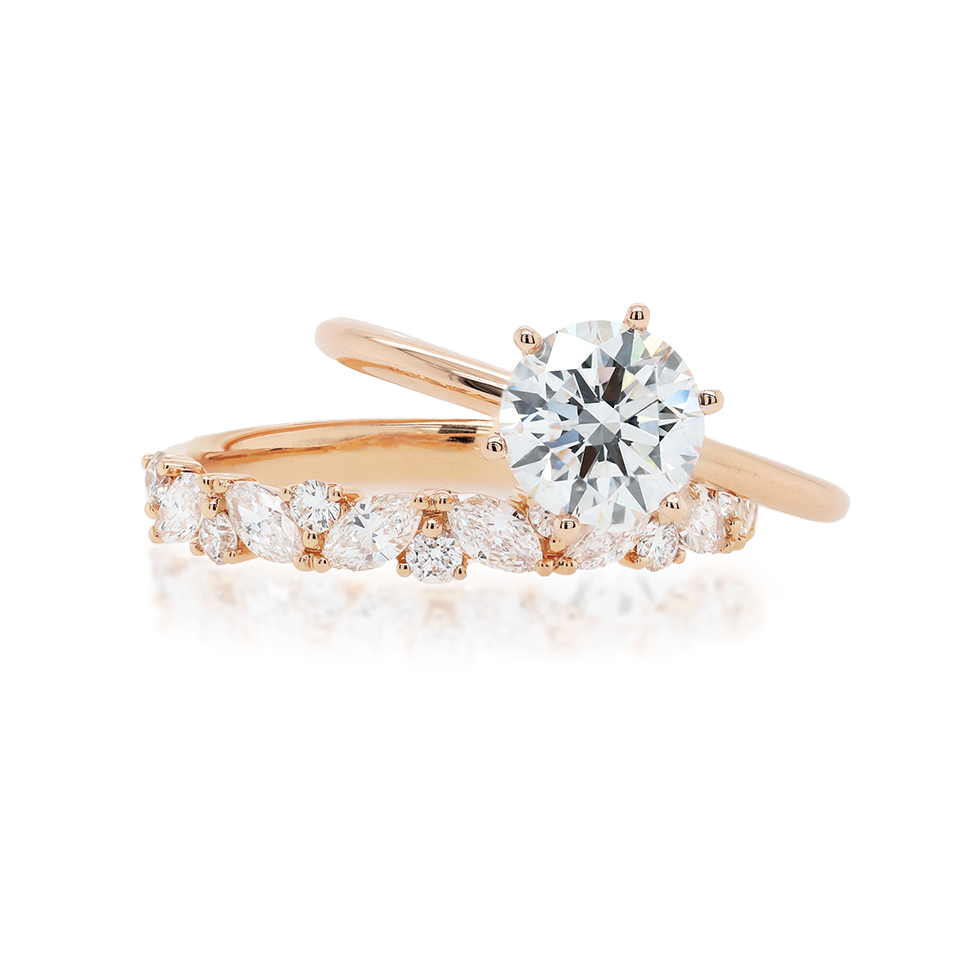
At JANAI we only offer solid gold rings for your custom engagement ring and wedding rings. Crafted to be enduring and last your lifetime.
Book your private consultation at JANAI Jewellery to create your dream engagement ring in Melbourne.